Titan, Enceladus and hundreds more
A moon with methane seas, a moon that sprays ice into space, a Death Star, a yin-and-yang moon and a sponge. And hundreds of little ones.
How many?
Saturn has 293 confirmed moons as of August 2026, says NASA’s Saturn moons page: more than any other planet. NASA Science: Saturn moons · checked 27 Oct 2026
NASA’s Saturn facts page, NASA’s fact sheet, NASA Space Place and ESA still give 274, the count after 128 new moons were announced in March 2025. NASA Science: Saturn facts · checked 27 Oct 2026 NASA NSSDC: Saturn fact sheet · checked 27 Oct 2026 NASA Space Place: All about Saturn · checked 27 Oct 2026 ESA: Facts about Saturn · checked 27 Oct 2026 NASA NSSDC: Saturnian satellite fact sheet · checked 27 Oct 2026
NASA’s main Saturn page just says “dozens of officially recognised moons”. NASA Science: Saturn · checked 27 Oct 2026
They range from Titan, bigger than the planet Mercury, to moons as small as a sports arena. NASA Science: Saturn moons Some small ones are shaped like potatoes or ravioli. NASA Science: Saturn moons
Saturn’s moons were first named after Titans from Greek and Roman myth. Newer ones take names from Gallic, Inuit and Norse stories too. NASA Science: Phoebe
Titan: the moon with weather
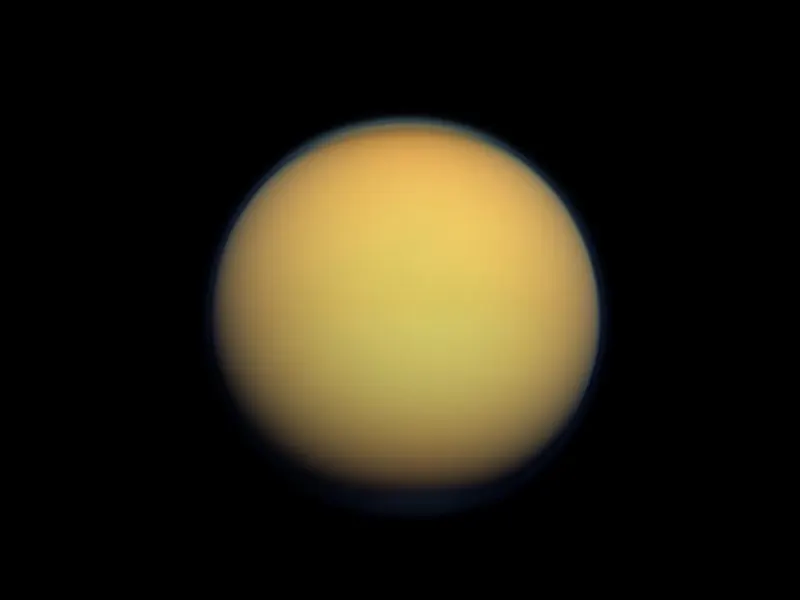
Titan is Saturn’s largest moon, and the only moon known to have a substantial atmosphere. NASA Science: Titan facts Only Jupiter’s Ganymede is bigger, by just 2 percent. Titan is bigger than our Moon and even the planet Mercury. NASA Science: Titan facts
Titan’s radius is about 2,575 km, nearly 50 percent wider than our Moon. NASA Science: Titan facts
Christiaan Huygens discovered Titan on 25 March 1655 and called it “Luna Saturni”: Saturn’s moon. The name Titan came later, from John Herschel. NASA Science: Titan facts
Titan takes 15 days and 22 hours to go round Saturn, always showing it the same face. NASA Science: Titan facts Titan’s seasons each last more than seven Earth years. NASA Science: Titan facts
Air, rain and seas
Titan’s air presses down about 60 percent harder than Earth’s, and reaches about 600 km up: 10 times higher than ours. NASA Science: Titan facts It is about 95 percent nitrogen and 5 percent methane. NASA Science: Titan facts
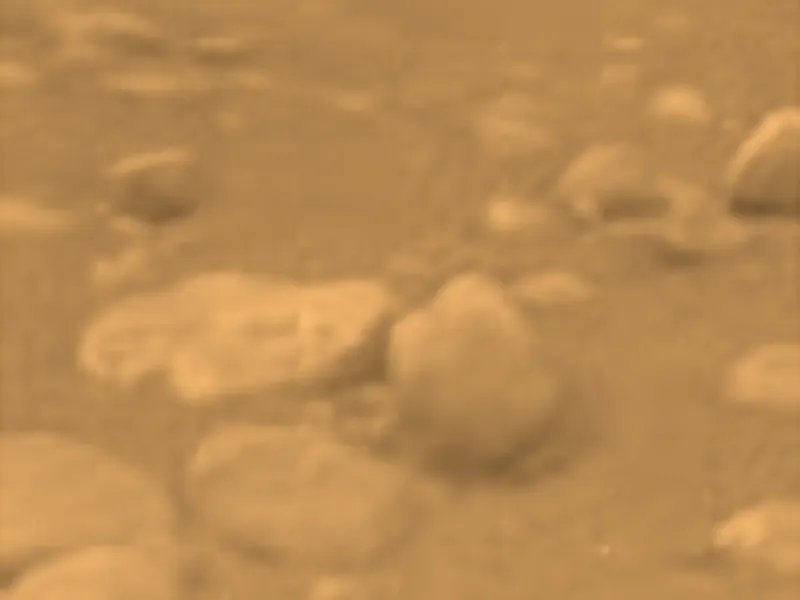
It is −179 °C on Titan, so cold that water ice plays the part of rock. NASA Science: Titan facts
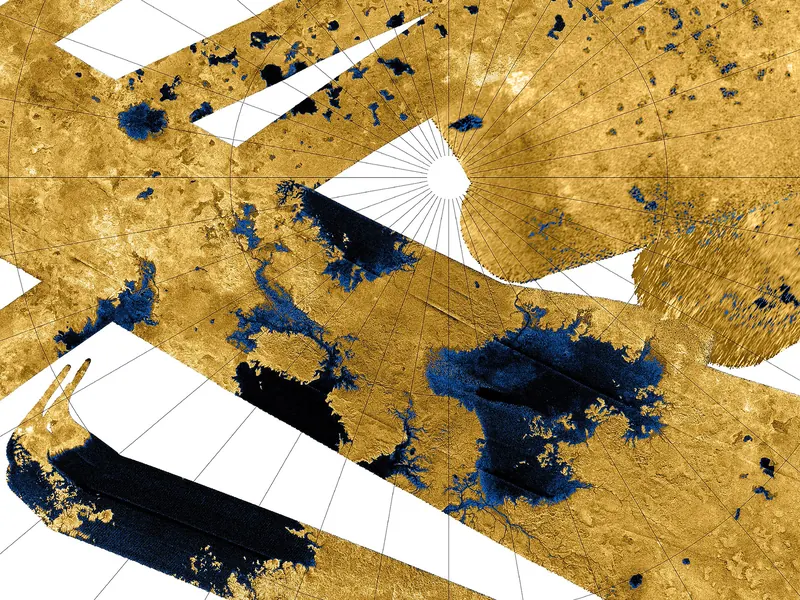
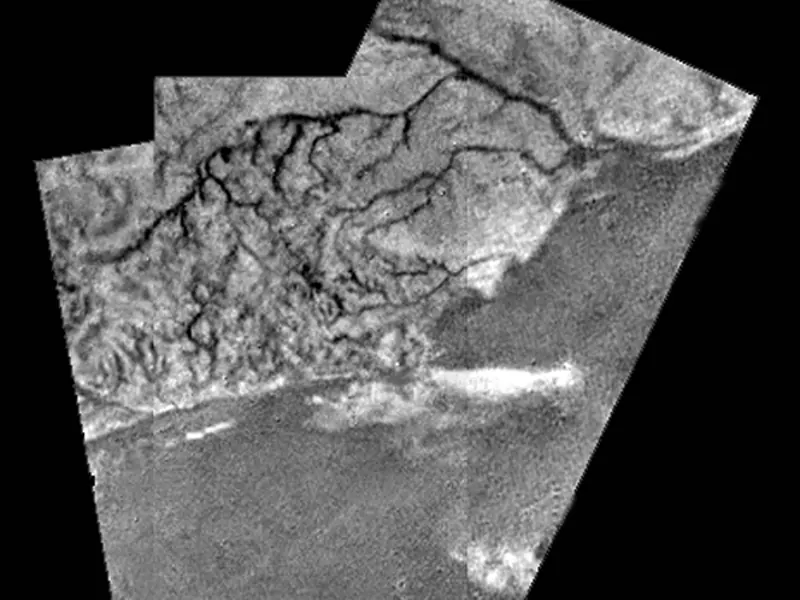
Titan is the only place besides Earth known to have liquids on its surface: rain, rivers, lakes and seas of methane and ethane. NASA Science: Titan facts
Cassini-Huygens revealed Titan’s lakes and seas of liquid methane and ethane, topped up by rain from hydrocarbon clouds. NASA Science: Cassini Titan science
Titan has dunes, and the “sand” is dark hydrocarbon grains thought to look like coffee grounds. NASA Science: Titan facts
An ocean, or not?
NASA’s Titan facts page says Titan is thought to have a subsurface ocean of water. NASA Science: Titan facts · checked 27 Oct 2026
But a NASA-led study in December 2025, reanalysing Cassini data, suggests Titan may not have a global ocean: more likely ice, layers of slush and pockets of water possibly as warm as 20 °C. NASA: Study suggests Titan may not have a global ocean (Dec 2025) · checked 27 Oct 2026
Enceladus: the ice fountain
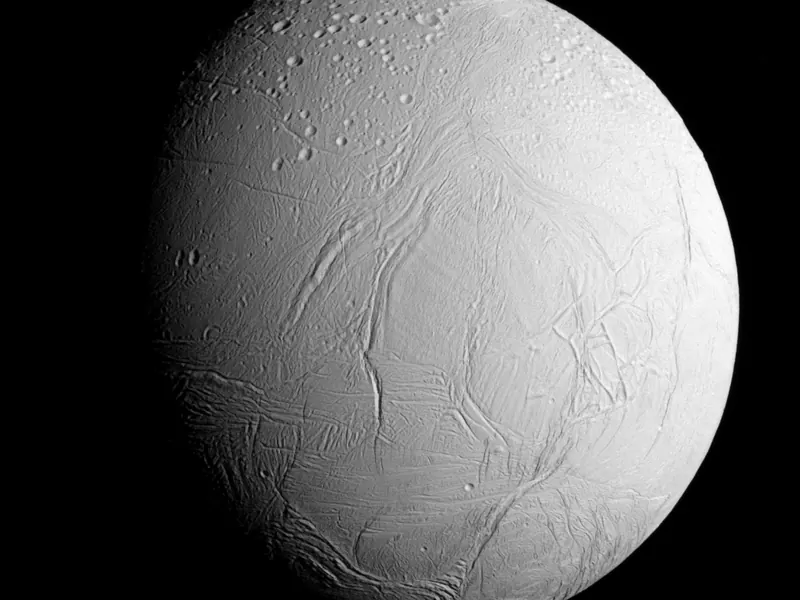
Enceladus is about 500 km across and the most reflective body in the solar system. NASA Science: Enceladus Because it reflects so much sunlight, its surface is about −201 °C. NASA Science: Enceladus
In 2005 Cassini found icy water particles and gas gushing from Enceladus at about 400 m a second. NASA Science: Enceladus The jets come from warm cracks that scientists call the “tiger stripes”. NASA Science: Enceladus
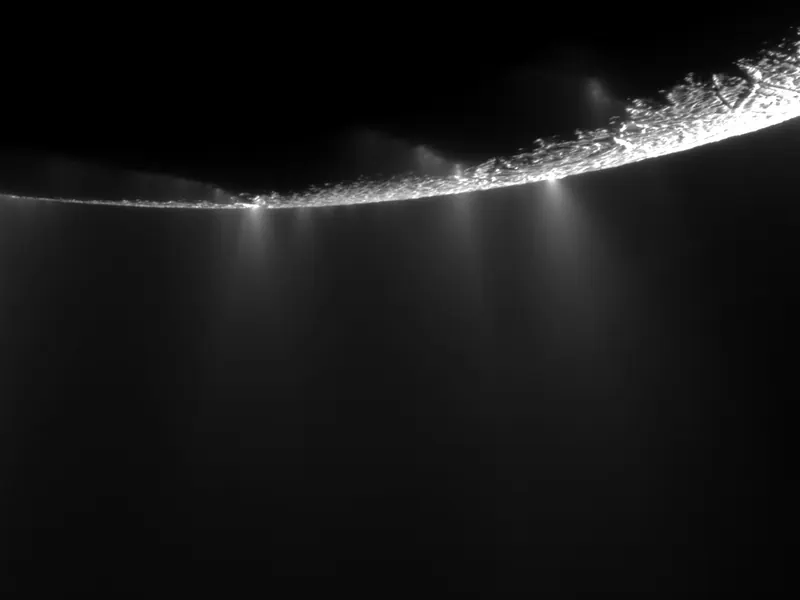
Enceladus has a global ocean under its ice. NASA Science: Saturn moons The ice is thought to average 20 to 25 km thick, but may be just 1 to 5 km thick at the south pole. NASA Science: Enceladus
Its spray spreads out round its orbit to make Saturn’s E ring. NASA Science: Enceladus Tiny grains of silica in the E ring point to hydrothermal vents deep under Enceladus’s ice, like those on Earth’s ocean floor. NASA Science: Enceladus
Enceladus goes round Saturn twice for every once that Dione does. NASA Science: Enceladus
William Herschel spotted Enceladus on 28 August 1789. NASA Science: Enceladus
The smaller big moons
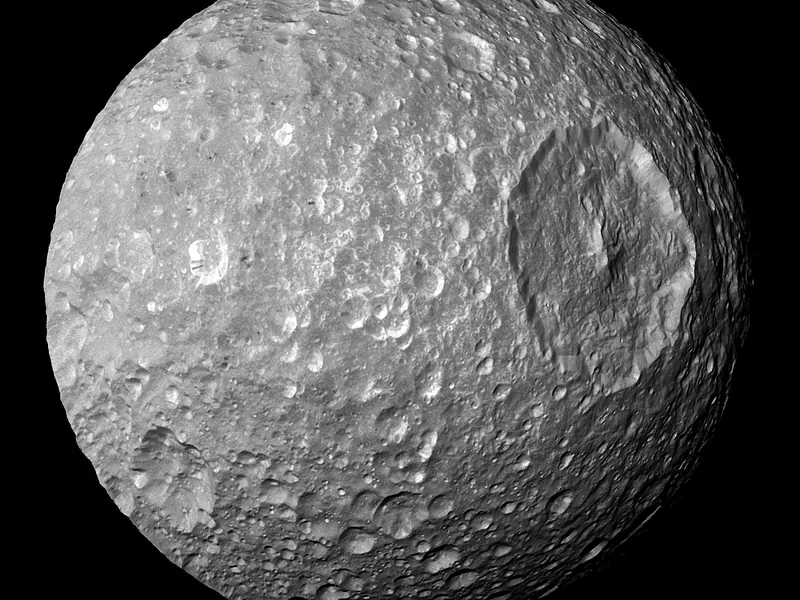
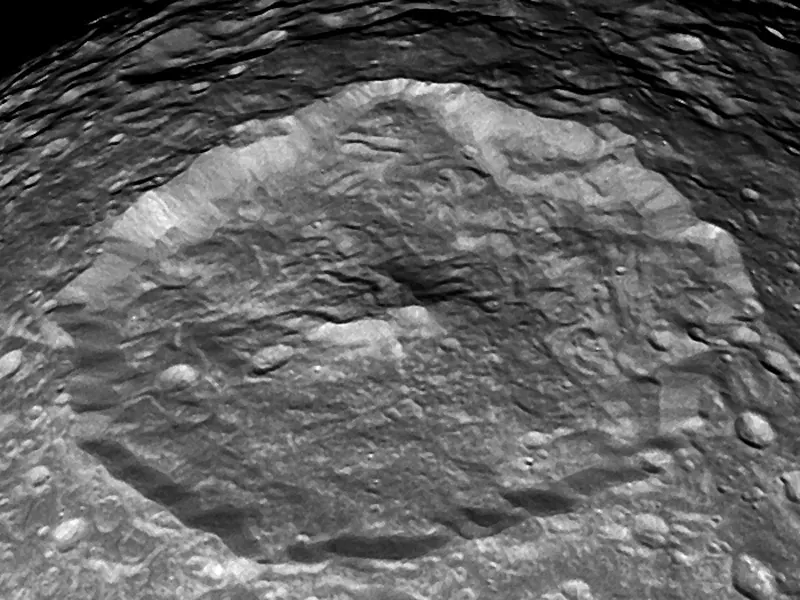
Mimas is the smallest and innermost of Saturn’s major moons, about 394 km across on average. NASA Science: Mimas Its Herschel Crater is 130 km across, a third of the moon’s width, which makes Mimas look like the Death Star from Star Wars. NASA Science: Mimas
William Herschel discovered Mimas on 17 September 1789. NASA Science: Mimas
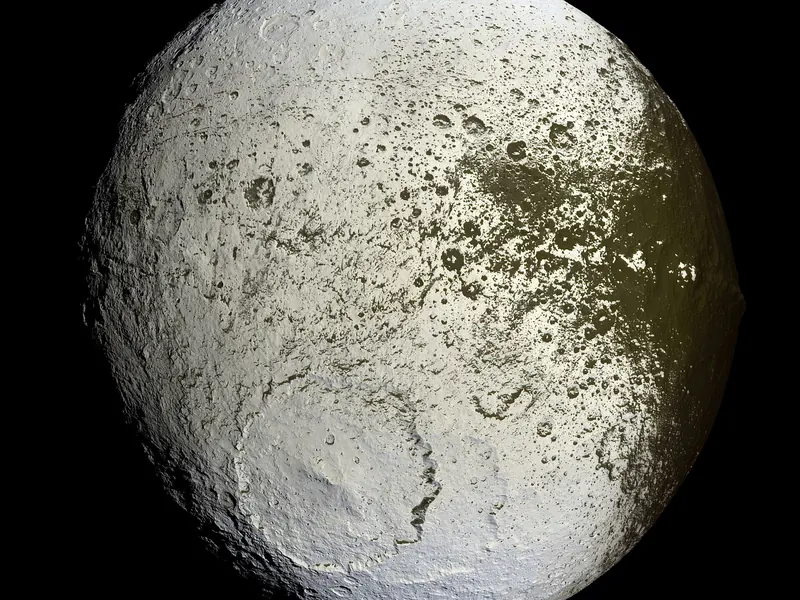
Iapetus is the “yin and yang” moon: one side is as dark as coal, the other much brighter. NASA Science: Iapetus Iapetus also has a chain of 10 km-high mountains running round its equator. NASA Science: Iapetus
Giovanni Cassini discovered Iapetus on 25 October 1671. NASA Science: Iapetus
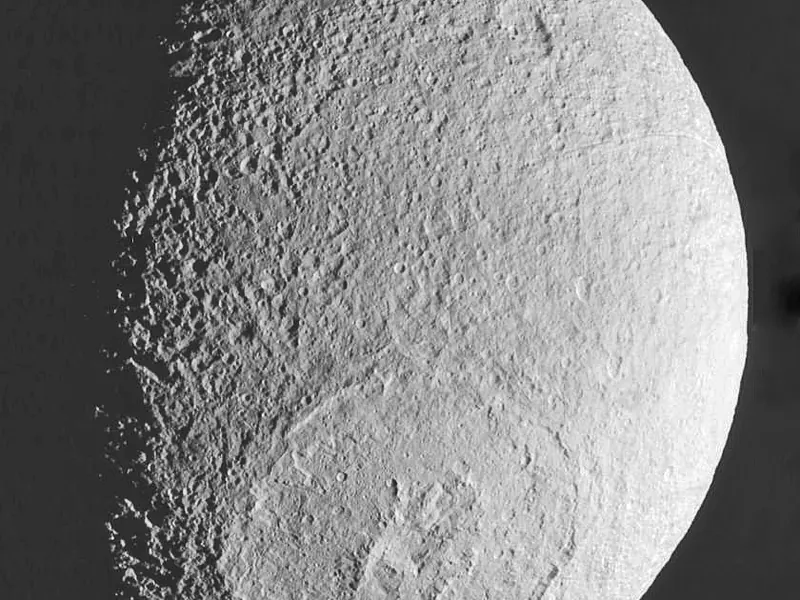
Tethys has Odysseus Crater, 400 km wide, and a valley, Ithaca Chasma, that runs about 2,000 km. NASA Science: Tethys
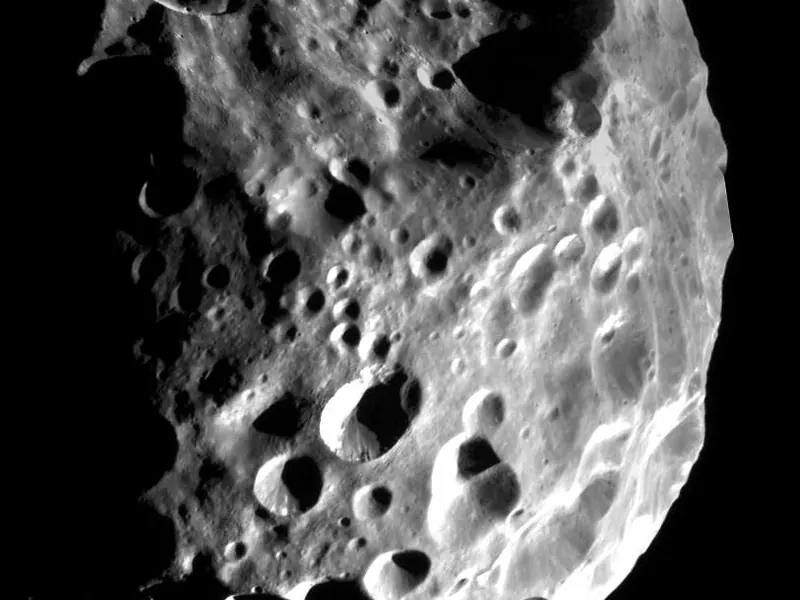
Phoebe goes round Saturn backwards, compared with most moons, and reflects only 6 percent of the sunlight it gets. It is most likely a captured object. NASA Science: Phoebe Phoebe was the first thing Cassini met on arrival, with a flyby on 11 June 2004. NASA Science: Phoebe
Hyperion tumbles chaotically and unpredictably as it orbits, and its surface looks rather like a sponge. NASA Science: Hyperion
Going round
How long the big moons take to go round Saturn, in Earth days: Mimas 0.942, Enceladus 1.370, Tethys 1.888, Dione 2.737, Rhea 4.518, Titan 15.945. NASA NSSDC: Saturnian satellite fact sheet
Average distance from Saturn’s centre, in thousands of km: Mimas 185.52, Enceladus 238.02, Tethys 294.66, Dione 377.40, Rhea 527.04, Titan 1,221.87. NASA NSSDC: Saturnian satellite fact sheet
Their sizes, as radii in km (most are not perfectly round): Mimas 208 × 197 × 191, Enceladus 257 × 251 × 248, Tethys 538 × 528 × 526, Dione 563 × 561 × 560, Rhea 765 × 763 × 762 and Titan 2,575. NASA NSSDC: Saturnian satellite fact sheet
Watch them go round at their true relative speeds: play Moon Transit Catcher →
Next: missions →