From Pioneer 11 to Dragonfly
Three flybys, then Cassini with Huygens riding along, then a drone for Titan.
Four robotic spacecraft have visited Saturn. NASA Science: Saturn
The first visitors
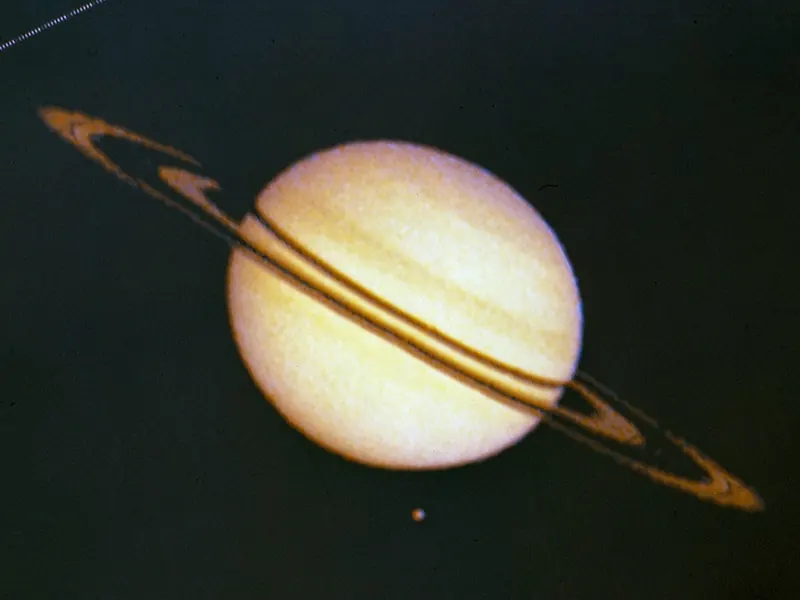
Pioneer 11, launched on 6 April 1973, was the first spacecraft to fly by Saturn, on 1 September 1979. NASA Science: Pioneer 11 Among Pioneer 11’s finds were Saturn’s F ring and a new moon. NASA Science: Saturn exploration
Pioneer 11 is now leaving the solar system and will pass near the star Lambda Aquila in almost four million years. NASA Science: Pioneer 11
Voyager 1 and 2
Voyager 1 flew past on 12 November 1980, 126,000 km away, and found five new moons and the G ring. NASA Science: Voyager 1 Voyager 1 showed the rings are made of thousands of ringlets. NASA Science: Saturn exploration
Voyager 2 flew past on 25 August 1981. NASA Science: Voyager 2 The twin Voyagers flew by nine months apart, in 1980 and 1981. NASA Science: Saturn
Cassini-Huygens
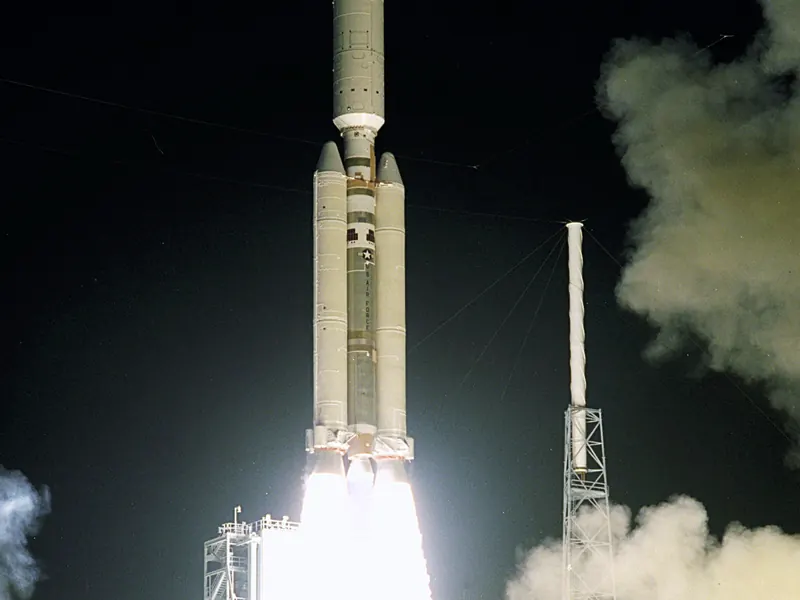
Cassini launched on 15 October 1997 on a Titan IVB rocket, carrying ESA’s Huygens probe. NASA Science: Saturn NASA Science: Cassini Grand Finale overview Cassini-Huygens was the largest interplanetary spacecraft ever built. ESA: Cassini-Huygens factsheet
On its way, the 5.6-tonne Cassini-Huygens swung past Venus twice, Earth once and Jupiter once for gravity boosts. ESA: Cassini-Huygens factsheet
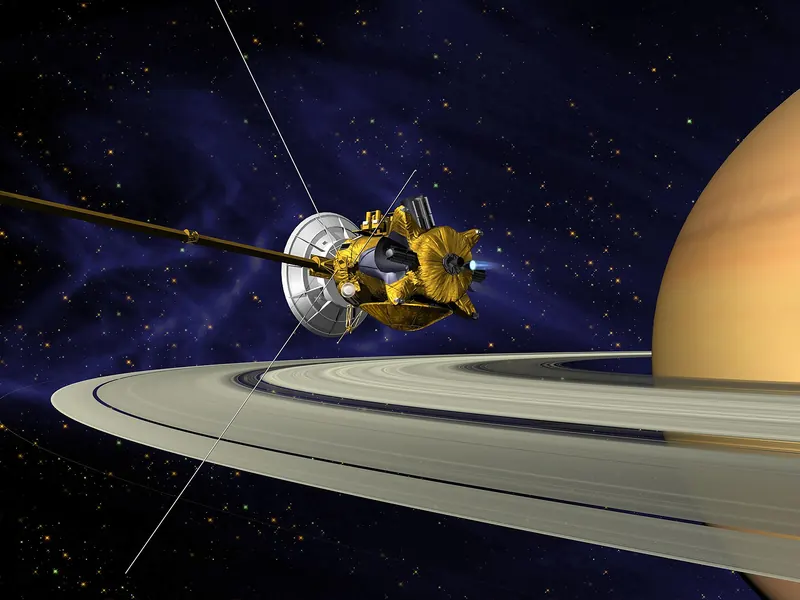
Cassini became the first spacecraft to orbit Saturn, on 1 July 2004. NASA Science: Saturn exploration
NASA’s Grand Finale page gives the arrival as 30 June 2004, in US Pacific Daylight Time. NASA Science: Cassini Grand Finale overview
Phoebe was the first thing Cassini met on arrival, with a flyby on 11 June 2004. NASA Science: Phoebe
Huygens lands on Titan
On 14 January 2005, ESA’s Huygens probe made the first soft landing on another planet’s moon: Titan. It sent the first and only pictures from Titan’s surface. NASA Science: Saturn exploration
Huygens’ heat shield was built to cope with up to 18,000 °C. ESA: Cassini-Huygens factsheet
The day the Earth smiled
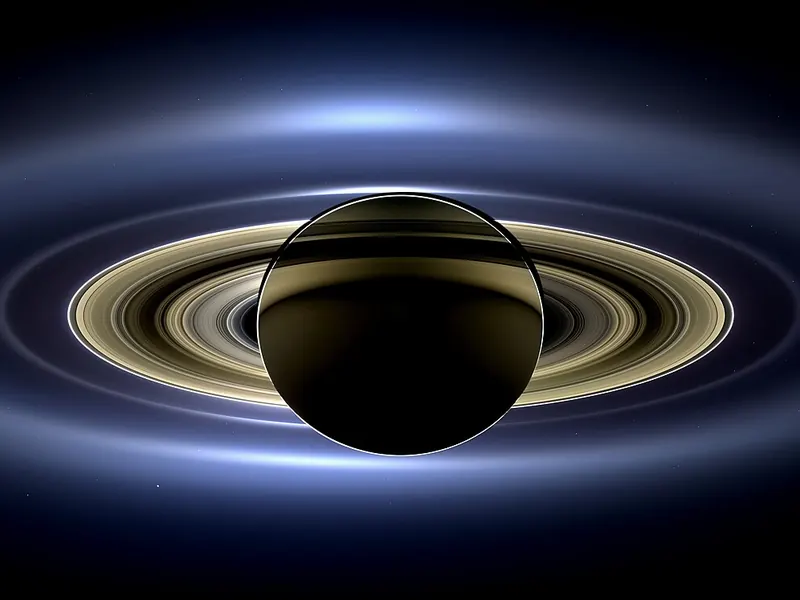
On 19 July 2013 Cassini slipped into Saturn’s shadow and photographed Saturn, seven of its moons, its inner rings and, far in the background, Earth. People on Earth were told in advance for the first time ever. NASA Science: The Day the Earth Smiled
The Grand Finale
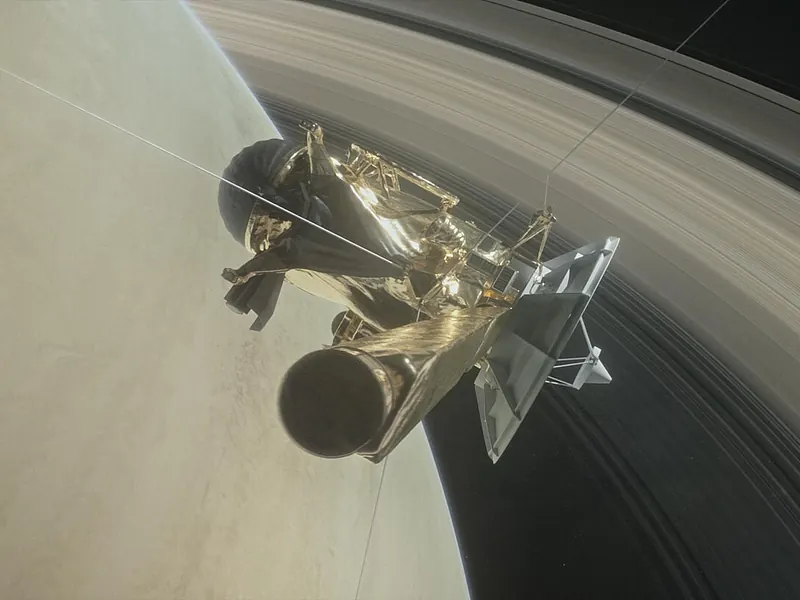
From April 2017, Cassini made 22 dives through the roughly 2,000 km gap between Saturn and its rings, where no spacecraft had been. NASA Science: Cassini Grand Finale overview
On 15 September 2017 Cassini ended its 13-year orbital mission with a planned plunge into Saturn, sending science data to the last second. NASA Science: Saturn exploration It was low on fuel, and NASA chose to end it in Saturn so it could never contaminate Enceladus or Titan. NASA Science: Cassini Grand Finale overview
Cassini by the numbers: 294 orbits, 162 targeted moon flybys, 453,048 images, 6 named moons discovered, 7.9 billion km travelled and 27 nations taking part. NASA Science: Cassini quick facts
Next: Dragonfly
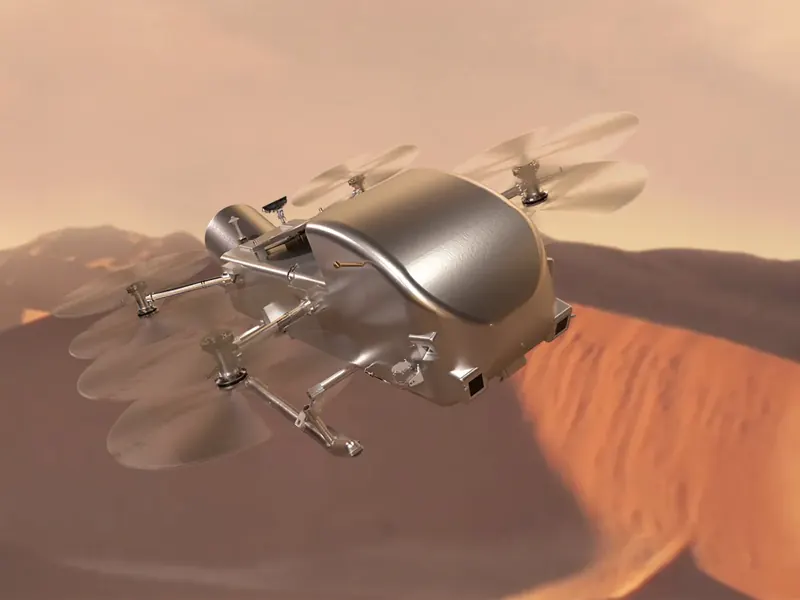
Next: NASA’s Dragonfly, the first rotorcraft to explore another world, is due to launch no earlier than July 2028 and arrive at Titan in late 2034, for a planned 3.3-year mission. NASA Science: Dragonfly · checked 27 Oct 2026
NASA’s Titan page puts it more simply: launch in 2028, and three years of landings. NASA Science: Titan · checked 27 Oct 2026
Dragonfly should make one flight every 1 to 2 Titan days. A Titan day, a “Tsol”, lasts about 16 Earth days. NASA Science: Dragonfly · checked 27 Oct 2026
Timeline
- 1655 Christiaan Huygens discovered Titan on 25 March 1655 and called it “Luna Saturni”: Saturn’s moon. The name Titan came later, from John Herschel. NASA Science: Titan facts
- 1979 Pioneer 11, launched on 6 April 1973, was the first spacecraft to fly by Saturn, on 1 September 1979. NASA Science: Pioneer 11
- 1980 Voyager 1 flew past on 12 November 1980, 126,000 km away, and found five new moons and the G ring. NASA Science: Voyager 1
- 1981 Voyager 2 flew past on 25 August 1981. NASA Science: Voyager 2
- 1997 Cassini launched on 15 October 1997 on a Titan IVB rocket, carrying ESA’s Huygens probe. NASA Science: Saturn NASA Science: Cassini Grand Finale overview
- 2004 Cassini became the first spacecraft to orbit Saturn, on 1 July 2004. NASA Science: Saturn exploration
- 2005 On 14 January 2005, ESA’s Huygens probe made the first soft landing on another planet’s moon: Titan. It sent the first and only pictures from Titan’s surface. NASA Science: Saturn exploration
- 2013 On 19 July 2013 Cassini slipped into Saturn’s shadow and photographed Saturn, seven of its moons, its inner rings and, far in the background, Earth. People on Earth were told in advance for the first time ever. NASA Science: The Day the Earth Smiled
- 2017 From April 2017, Cassini made 22 dives through the roughly 2,000 km gap between Saturn and its rings, where no spacecraft had been. NASA Science: Cassini Grand Finale overview
- 2017 On 15 September 2017 Cassini ended its 13-year orbital mission with a planned plunge into Saturn, sending science data to the last second. NASA Science: Saturn exploration
- 2028 Next: NASA’s Dragonfly, the first rotorcraft to explore another world, is due to launch no earlier than July 2028 and arrive at Titan in late 2034, for a planned 3.3-year mission. NASA Science: Dragonfly · checked 27 Oct 2026
Next: myths vs facts →